
About INITE.ai
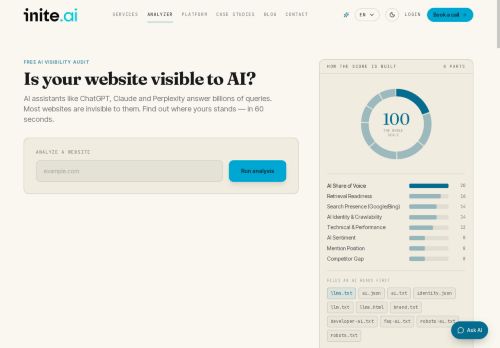
Analyzes whether AI assistants can reach, identify, and quote a website by simulating how models fetch and read pages.
It evaluates crawler policies, identity files (ai.json, llms.txt), structured data, metadata, and core site signals to determine retrieval and citation readiness.
The audit runs live prompts across major answer engines, measures search and citation presence, and computes a weighted visibility score across multiple sections.
Findings are reported by source (robots policy, identity files, schema, pages) so low scores point to specific technical or content causes.
Reports include prioritized remediation steps and prepared identity/schema updates to improve crawlability and citation likelihood.
Runs complete in about sixty seconds and can be run online or integrated into agent workflows for recurring monitoring.
Key Features
Use Cases
Who is it for?
It evaluates crawler policies, identity files (ai.json, llms.txt), structured data, metadata, and core site signals to determine retrieval and citation readiness.
The audit runs live prompts across major answer engines, measures search and citation presence, and computes a weighted visibility score across multiple sections.
Findings are reported by source (robots policy, identity files, schema, pages) so low scores point to specific technical or content causes.
Reports include prioritized remediation steps and prepared identity/schema updates to improve crawlability and citation likelihood.
Runs complete in about sixty seconds and can be run online or integrated into agent workflows for recurring monitoring.
Key Features
- Simulates AI assistants fetching and reading web pages to assess reachability, identification, and quotability
- Evaluates crawler policies, identity files (ai.json, llms.txt), structured data, metadata, and core site signals for retrieval and citation readiness
- Executes live prompts across major answer engines, measures search and citation presence, and computes a weighted visibility score across multiple sections
- Reports findings by source (robots policy, identity files, schema, pages) mapping low scores to specific technical or content causes
- Generates prioritized remediation steps and prepared identity/schema updates and supports online runs or integration into agent workflows for recurring monitoring
Use Cases
- Run live AI visibility audits to verify whether assistants can find, identify, and correctly quote your website by evaluating crawler policies, ai.json/llms.txt, metadata, schema, and site signals, producing source-tagged findings, a visibility score, and prioritized fixes your team can implement
- Perform citation readiness checks and structured data audits to uncover missing or malformed schema and identity files, automatically generate remediation guidance and schema snippets to improve AI retrieval, attribution, and eligibility for rich results
- Continuously monitor AI retrieval and crawler policy changes to detect regressions in assistant citation behavior, track visibility score trends, and convert prioritized fixes into actionable tickets for developers and content teams to maintain consistent discoverability and proper attribution
Who is it for?
- Website owners
- Seo specialists
- Technical seos
- Web developers / devops engineers
- Digital marketing managers
- Content strategists and editors
- Product managers
- Search / seo agencies
- Platform & automation engineers
- Privacy, legal, and compliance teams
No review yet!
More SEO AI Tools
Explore other seo tools with user ratings, pricing details, and in-depth descriptions. Updated regularly by our editorial team.